Animation Cel Prices Went Vertical — and It Isn't Really About Nostalgia
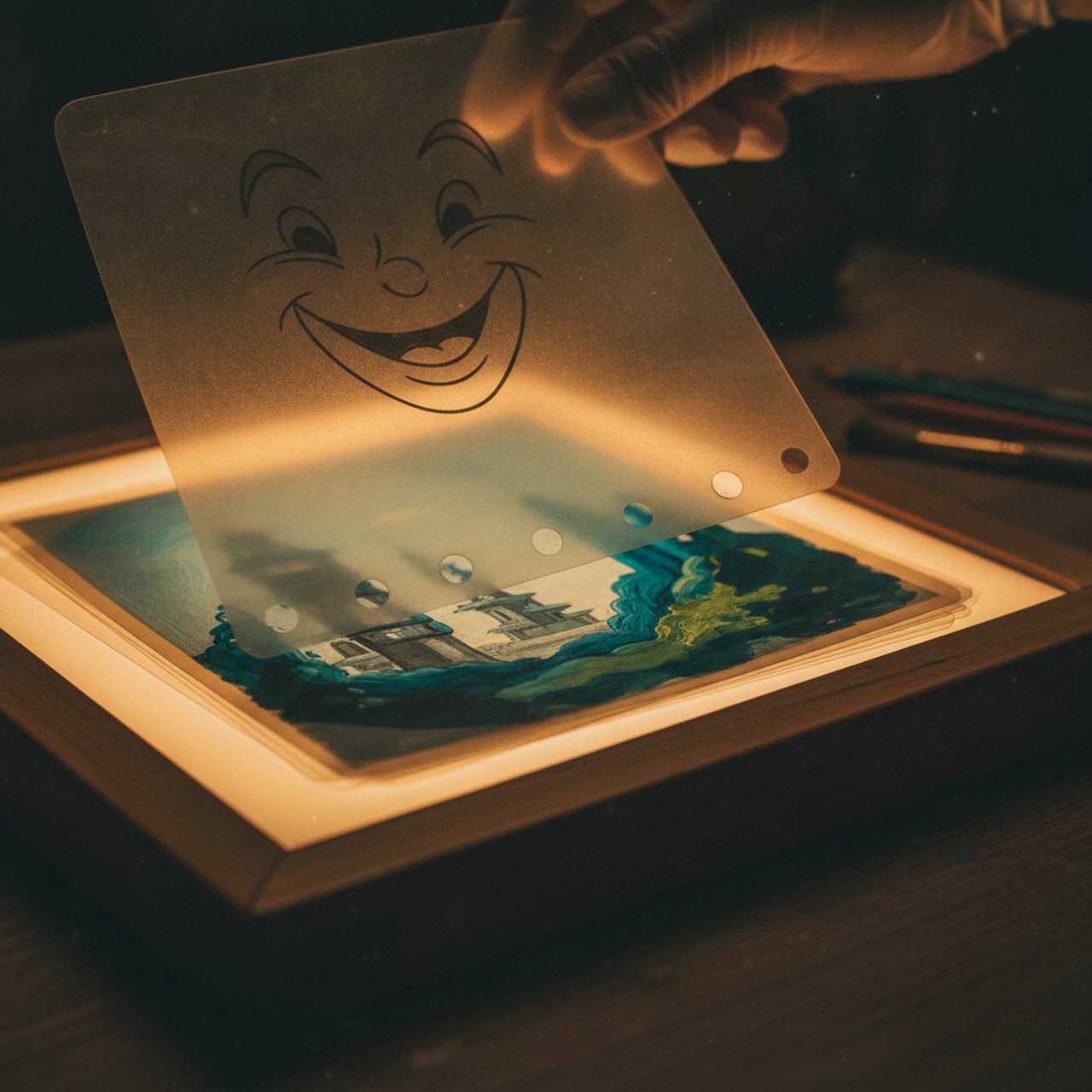
In 1955, if you had walked into a small shop in Tomorrowland at Disneyland called the Art Corner, you could have bought an original hand-painted animation cel — used in an actual Disney film, with a gold seal on the back saying so — for 75 cents. The shop existed from 1955 to 1966, and it functioned as an accidental rescue mission: studios had no sentimental interest in used cels and destroyed or washed enormous numbers of them.
This May, a single production cel of Pikachu sold at auction for $73,200.
Artnet devoted an episode of its market podcast on 3 August to asking why cartoon frames have suddenly started behaving like blue-chip art. The usual answer is "nostalgia," which is true in the way that "hunger" explains restaurants. It's not wrong. It's just not the interesting part.
The numbers, because they're genuinely silly
The clearest data point is Heritage Auctions' The Art of Anime, Vol. VIII, held 15–17 May 2026. It made $2.5 million, which beat the previous world record for an anime-focused animation art sale of $1.48 million — a 69% jump in a single auction cycle. It ran 1,206 lots, drew 2,665 bidders, and sold every single lot.
The top of the sheet:
- $73,200 — Pokémon, "Bulbasaur and the Hidden Village," Pikachu cel with key master background
- $73,200 — Akira, Tetsuo, Kaori and Kaneda's motorcycle
- $67,100 — Princess Mononoke, San (a Ghibli record for Heritage)
- $67,100 — Pokémon, Pikachu and Ash, with master background and animation drawing
- $46,360 — My Neighbor Totoro, Satsuki and Mei on the Catbus
- $31,720 — Dragon Ball, Goku, "The Roaming Lake"
- $19,520 — The End of Evangelion, Asuka and Shinji
It isn't just anime. In July, Propstore sold a Simpsons cel — Homer, Lenny and Carl at the Bowlerama, from the 1999 episode "Hello Gutter, Hello Fadder" — for £25,200 with premium, a world auction record for Simpsons production art. And in August 2025, Heritage's Art of Disney sale made $5.19 million, led not by a cel at all but by a Gustaf Tenggren concept painting for Snow White at $168,000.
"Collectors today recognize these works not only as nostalgic touchstones, but as important pieces of animation history." — Jim Lentz, Heritage's VP of Animation & Anime Art
The detail everyone skips: you're buying the background
Read that top-lot list again and notice which phrase keeps appearing. With key master background. Both $73,200 lots and one of the $67,100 lots carry it. The Catbus — arguably the single most beloved image in the entire Ghibli canon, a shot people have tattooed on themselves — came in at $46,360 without one.
A cel on its own is a sheet of transparent plastic with a character painted on it. Held up to the light it looks like a decal. A key master background is the hand-painted watercolour or gouache panel that was under that specific cel on the animation stand — the landscape, the room, the sky. It's a genuine painting, made once, by a background artist whose name you will never learn.
Pair the two and you don't have a souvenir, you have the actual composed image as the camera saw it. That's what appears to be doing the heavy lifting at the top of the market — not merely which character it is. Which is a quietly satisfying result: after decades of animation being treated as merchandise, the thing collectors are paying most for is the part that behaves like a painting.
The real engine: a supply line with a death date
Here's the structural fact that makes this market different from every other collectibles boom. Cels stopped being made, and they are never being made again.
Disney's last feature animated on hand-painted cels was The Little Mermaid in 1989; from The Rescuers Down Under in 1990 the studio moved to its digital CAPS system. Studio Ghibli's last cel-animated feature was Princess Mononoke in 1997 — and even that one cheated at the end, when the studio bought computers to digitally paint the last several thousand frames it didn't have the hands to finish. The follow-up, My Neighbours the Yamadas, was fully digital. Television anime finished the same migration over the following few years.
So the world contains a fixed, permanently sealed inventory of hand-painted animation frames, produced roughly between the 1930s and the early 2000s, that is only ever going to get smaller. Compare that to almost anything else people collect: sneakers, watches, prints, contemporary painting, designer vinyl monsters — all still in production, all with a manufacturer who can respond to demand by making more. Cel supply cannot respond to anything. It's a closed set.
And note where the money landed at Heritage: Princess Mononoke, the last one. The final cel-painted Ghibli film set the studio's price record at that house. That is not a coincidence you have to squint at.
Layer the demographics on top and it's almost over-determined. The children who watched Pokémon in 1998 are now around 35, which in collectibles terms is roughly the age at which nostalgia acquires a credit limit.
The joke at the centre of the whole thing
Now put the numbers next to each other, because the comparison is genuinely absurd.
The entire record-breaking anime auction — all 1,206 lots, every hand-painted original in the room — made $2.5 million. In February 2026, one Pokémon trading card, the Pikachu Illustrator, sold at Goldin for $16,492,000 after 97 bids — a Guinness-adjudicated record for any trading card ever sold. Logan Paul had bought it in 2021 for $5.275 million.
So the market currently pays roughly six and a half times more for a single piece of printed cardboard than for every hand-painted original artwork in the biggest anime art auction ever held. One of these things is a unique object made by a human with a brush. The other is one of 39 printed copies. Guess which one is worth more.
And to complete the humbling: three months ago Jackson Pollock's Number 7A sold at Christie's for $181.2 million. That one painting is worth about 72 record-breaking anime auctions. The animation art "boom" is, in fine-art terms, a rounding error having a very good time. We've written before about how the gap between price and meaning is where the art market keeps its comedy, and about a $50 million dinosaur that raised the same question from the opposite direction.
The catch nobody puts in the press release
Four honest problems, because a boom is exactly when they get skipped.
The material is dying. Cels are cellulose acetate. Acetate shrinks, warps, and can develop what film archivists call vinegar syndrome — it literally starts to smell of vinegar as it degrades. The paint, applied to the back of a smooth plastic sheet, can crack, lift or delaminate. Unlike an oil painting, which a conservator can stabilise for centuries, a cel's baseline trajectory is downward. You are buying a slowly failing object.
100% sell-through is not automatically heat. It's a great headline, and it can also mean reserves were set conservatively across 1,206 lots. Both things are usually true at once. Read it as healthy demand, not as a market with no floor.
Headline prices include the buyer's premium. That $73,200 is what the buyer paid, not what the seller received — auction houses typically take somewhere in the region of 20–25% on top of the hammer. If you're mentally marking your own collection to market, you're using the wrong number.
The low end is a minefield. Studios and licensors have issued vast quantities of "limited edition" hand-painted cels that were never anywhere near a camera. Fan cels, recreations and outright fakes circulate freely. The distinction between production cel, publicity cel and reproduction cel is worth thousands of dollars and is frequently blurred in listings — sometimes by sellers who don't know either.
If you actually want to buy one
The encouraging news is that this is one of the very few art markets where a normal person can still participate honestly. Below the trophy lots, plenty of genuine production cels change hands in the low hundreds. A short checklist:
- Insist on the word "production." Then ask what evidence supports it — studio seal, provenance chain, matching animation drawing.
- Ask whether the background is original. "Key master background" means the real painted panel. "Printed background" or "reproduction background" means a copy, and that gap is most of the price.
- Prefer the frame over the character. A composed, readable, on-model shot from a famous moment beats a rare character in an awkward pose, every time.
- Store it flat, dark, dry and cool. No sunlight, no attics, no basements, acid-free materials. You are managing a decline, not preventing one.
- Watch the opposite market too. Cels are scarce and rising; meanwhile a trillion dollars of inherited art is flooding the low end. Same decade, opposite supply shocks.
- Buy the one you want on your wall. The same principle we apply to starting any collection on a normal budget: if the market never moves, you should still be happy.
Why this is more interesting than a price chart
There's a particular kind of cultural object that gets thrown away by the people who make it and then canonised by the people who loved it. Movie posters went through it. So did sports imagery, comic art, and eventually — as museums keep discovering — basically everything the internet grew up on.
Animation cels are the purest case, because the discarding was so total and so recent. Disney sold them for 75 cents in a theme-park gift shop, and by the 1970s and 80s the going rate for a production cel was around $90. Studios in Japan routinely binned them or handed them out. Nobody involved thought they were making art objects; they were making the industrial by-product of a manufacturing process, the way a sawmill makes sawdust.
Then the process ended, permanently, and what was left turned out to be the only physical trace of an entire way of making images. Millions of hours of work by painters whose names appear in credits nobody reads. That's what a $73,200 Pikachu actually is — not a cartoon, but the last surviving frame of a craft that closed down while everyone was watching something else. The machines making pictures now won't leave anything behind you can hold up to a lightbox.
Which, at 75 cents in 1955, was arguably the bargain of the century. Everything since has just been the market catching up.
Quick questions
How much is an animation cel worth? Anywhere from about $50 to $73,200. That top figure was reached twice at Heritage in May 2026 — a Pikachu cel and an Akira cel — but most of the 1,206 lots in that sale went for far less. Value depends on the character's prominence in the frame, whether the original hand-painted background is included, how famous the moment is, and whether provenance proves it was actually used in production.
Why have animation cel prices gone up so much? Supply ended permanently. Studios moved from hand-painted cels to digital ink and paint between roughly 1989 and 2004 — Disney's last cel feature was The Little Mermaid (1989), Ghibli's was Princess Mononoke (1997). No new cels will ever exist, and that fixed pool is meeting a generation that grew up on those films and now has money.
Are animation cels a good investment? Buy them because you want them. Cellulose acetate shrinks, warps and can develop vinegar syndrome, and paint can lift off the plastic, so condition trends downward over decades. The market also carries a lot of limited-edition reproductions and fan cels that were never used in production. Use established auction houses, check provenance, and remember headline prices include a buyer's premium.
How we sourced this
Auction results come from Heritage Auctions' own release for The Art of Anime, Vol. VIII (15–17 May 2026), Propstore's July 2026 animation sale, and Heritage's Art of Disney sale of August 2025 as reported by Animation Magazine. The Pikachu Illustrator figure is the Guinness World Records entry for the Goldin sale of 16 February 2026; the Pollock figure is Artnet's report on Christie's Newhouse sale of 18 May 2026. Art Corner pricing and dates are from the public record of the Disneyland shop, which operated 1955–1966. Prices quoted are final prices including buyer's premium unless stated otherwise. Published 6 August 2026.