The Great Boomer Art Dump: $1 Trillion of Art and Almost Nobody to Sell It To
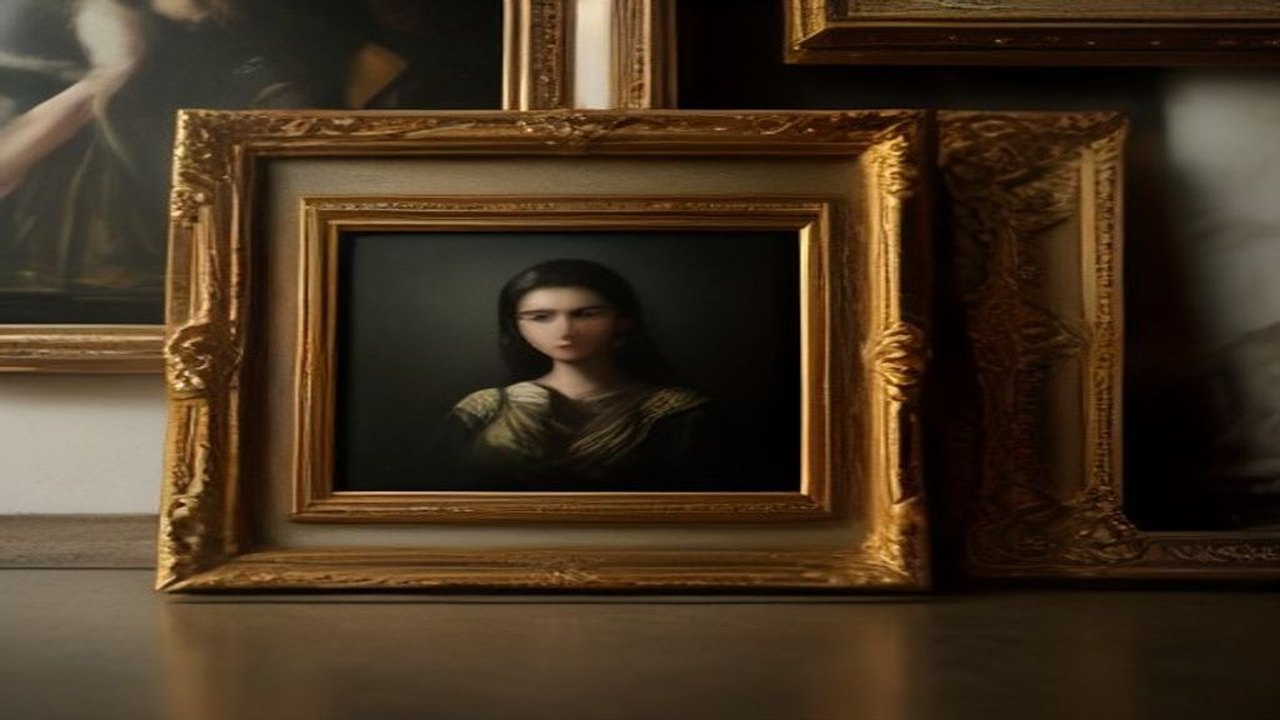
Somewhere in your extended family there is a painting. Gold frame, quite heavy, a landscape or a vaguely serious-looking person. It has hung above the same sideboard since roughly 1988. At some point an adult told you, in a lowered voice, that it was worth something.
It is not. Statistically, it is almost certainly not. And over the next decade this is going to become one of the more awkward running conversations in Western households, because that painting is about to have several million siblings arrive on the market at exactly the same moment.
Bloomberg gave the phenomenon a name on 1 August with a newsletter headlined "No One Is Ready for the Great Boomer Art Dump", following a feature the day before that put a number on it. Roughly $31 trillion is set to move from about 1.2 million people worth over $5 million by 2035. Art and collectibles are conservatively around 5% of that. Which lands you at very close to $1 trillion of art changing hands, mostly to people who did not choose it, do not want it, and have nowhere to put it.
The mismatch, in one number
Here is the part that makes this genuinely funny rather than merely sad.
The Art Basel and UBS Global Art Market Report 2026 put total global art sales for 2025 at $59.6 billion, up 4% — a decent recovery year after two bad ones. Public auctions took $20.7 billion of that, dealers $34.8 billion.
So the entire planet's art trade, every gallery and auction house and fair combined, absorbs about $60 billion a year. Against roughly $1 trillion arriving over a decade. Even if every single inherited work were desirable, the plumbing is not sized for it.
But they are not desirable, and the same report says so with brutal precision. Look at how 2025 split:
- Lots above $10 million: value up 30%
- Lots above $1 million: value up 21%, number of transactions up 15%
- Sales below $50,000: down 2% in value and down 2% in volume
That last line is the whole story. The only band of the market that shrank in a growth year is the exact band that virtually every inherited collection lives in. The trophy end is booming. The sideboard end is quietly deflating. Your uncle's Warhol print and a Basquiat are not in the same business; they are barely in the same economy.
The art market is not one market. It is a very small market for masterpieces, wearing a very large market for furniture as a coat.
Why nobody younger wants it
There is a line that has been doing the rounds in art-market commentary that cuts closer than it should: why would you pay eight figures for a Warhol silkscreen of Brigitte Bardot if you have never heard of Brigitte Bardot?
It sounds glib. It is actually the entire mechanism. A large share of what boomers bought was priced on recognition — the sitter, the reference, the cultural moment the image nodded to. When recognition evaporates, so does the premium, and what remains is just the object: canvas, pigment, a frame, and a stranger's face.
Meanwhile the people inheriting it have wildly different taste, and — more importantly — wildly different walls. Boomer collecting assumed a five-bedroom house with corridors. Their children have a rented flat with one usable wall, already occupied by a television. Even free art has a rent cost.
And the categories the younger market actually gets excited about are not the ones sitting in the estate. They are buying hand-painted animation cels from films they grew up on, designer vinyl monsters, prints by artists they follow on Instagram, and the occasional $50 million dinosaur. Nostalgia is not dead. It has simply moved to a different decade, and taken the money with it.
The museum escape hatch is bolted shut
The traditional plan for an unsellable collection was to give it away and take the tax deduction. Everybody assumes museums are grateful. Museums are not grateful. Museums are full.
The scale of this is rarely appreciated by donors. Estimates of how much of a museum's collection is actually on view at any moment vary by institution and by how you count, but they are uniformly small — the Bates College Museum of Art's own explainer on the subject walks through why so little is ever hung, and figures in the range of 2% to 10% on display get quoted for major encyclopedic museums. The rest lives in climate-controlled rooms you will never see.
Which means every accepted donation is a permanent liability. The museum takes on storage, insurance, cataloguing, condition checks and conservation, forever, for an object that will probably never hang. Canadian museums told CBC's Cost of Living more or less exactly this: they are running out of space, and enthusiastic donations are part of the problem, not the solution.
So acquisition committees say no, constantly. They say no even faster when the gift arrives with conditions — the classic being a requirement that the collection be shown together, permanently, under the donor's name. That is not a donation. That is a lodger with a lease.
What the family actually discovers
The typical sequence, having watched it happen to more than one household, runs like this.
Stage one: the number in everyone's head. Somebody remembers a figure. It is always a figure from the moment of purchase, always the insured value, and always assumed to have gone up.
Stage two: the appraisal. A professional explains the difference between replacement value and market value. Replacement value is what you would pay to buy a comparable thing at retail tomorrow. Market value is what someone will actually hand you today. The gap is frequently 70% or more, and no, the insurance certificate was never a price tag.
Stage three: the fees. Auction houses charge the seller a commission, plus photography, cataloguing, insurance and shipping. On a lot expected to make $800, the economics simply do not close. Many houses will decline the consignment outright, because listing it costs them more than their cut.
Stage four: the shipping quote. A large framed oil painting is heavy, fragile, and irregularly shaped — a nightmare freight category. It is entirely routine for crating and transport to exceed the value of the work being crated and transported.
Stage five: the storage unit. Which is where an enormous quantity of this art is going to sit, at a monthly cost, for years, because nobody in the family can face being the person who threw away Grandma's painting.
That storage unit is the real monument of the great wealth transfer. Not a museum. A unit off a ring road, with a roller door, holding forty gold frames and a bicycle.
Now the good news, and it is genuinely good
Every glut is a crash for sellers and a sale for everyone else. If you have ever felt that original art was something that happened to other people — richer, older, better-dressed people — this decade is the widest open door in living memory.
Because here is what is actually being dumped: not junk, mostly. Competently made, real, hand-executed objects. Regional landscape painters who were locally respected and are now nationally forgotten. Twentieth-century studio ceramics. Mid-century prints, etchings, lithographs, drawings. Framed things with an actual human decision behind every mark. The stuff is good. It just is not famous, and in the art market fame is roughly 95% of price.
Which sets up an unusually clean opportunity. The material entering the market is high in craft and low in narrative, at precisely the moment the market has stopped paying for craft it cannot name. That is what a bargain is. If you want a practical starting framework, we've written a beginner's guide to collecting on a real budget, and most of it applies double right now.
Where to actually look, in rough order of how underpriced things get:
- Regional and provincial auction houses. Not the London and New York names. The ones clearing house contents in mid-sized towns, where a competent oil goes for less than a mediocre sofa.
- Estate sales in person. Online bidding has flattened prices almost everywhere except in rooms where you have to physically stand.
- Works on paper. Etchings, lithographs and drawings by genuinely skilled artists are the single most persistently underpriced category, largely because they are small and undramatic on a phone screen.
- Unfashionable frames. Heavy gilt is currently a liability. Buy the picture, replace the frame, and you have paid a discount for someone else's taste.
- Anything that photographs badly. The online-auction era prices work by thumbnail. Subtle, tonal and textured pieces get systematically undervalued because they die at 400 pixels.
Some honest limits on all this
Three things worth saying plainly, because "buy the dip" is exactly the kind of advice that ages badly.
Cheap does not mean it will appreciate. The lower market is shrinking for structural reasons — taste, wall space, a generation that treats objects as clutter. Buying into a shrinking segment because it is cheap is how people end up with a second storage unit. Buy things you want to live with, full stop. If the price never moves, you should still be pleased. The gap between price and meaning works in both directions, and it is a lot more comfortable on this side of it.
Condition is where the money quietly goes. Cleaning and relining an oil painting, or conserving foxed paper, routinely costs several hundred to several thousand. On a $200 purchase that is not a repair bill, it is a decision to buy the piece a second time. Inspect in person, in daylight, and assume nothing improves on its own.
The trillion-dollar figure is an estimate on an estimate. It rests on projected wealth transfer totals and an assumed 5% allocation to art and collectibles. Both parts are modelled, not counted, and reasonable people put the share anywhere from 2% to 10%. Treat $1 trillion as an order of magnitude — "vastly more than the market can eat" — rather than a measurement.
What this actually reveals
Strip out the numbers and there is a quieter point underneath, one the art world does not enjoy saying out loud.
For about forty years, a very large number of people bought art with the half-belief that it was also an asset. Not a serious investment, exactly — more a comforting background hum that the money was not really spent, just parked somewhere decorative. That belief was maintained by headlines about the top 0.1% of the market: the records, the Basquiats, the crowd-magnet masterpieces. It was never true of the objects most people actually own.
The boomer art dump is simply the moment that gets audited. Millions of families are about to receive, in the form of a low appraisal, an answer to a question nobody had asked out loud since 1988.
And the answer is not depressing, it is just different from the one expected. The painting was never an asset. It was a thing somebody chose, and looked at, and liked being near for thirty years. That was the entire return, paid out annually, and it has already been collected in full.
Which is also, conveniently, the correct way to buy the next one. Museums are out of room, the trophy market has left the building, and there has rarely been a better moment for ordinary people to own real, hand-made, one-off art. The generation currently reinventing how museums talk is inheriting a warehouse. Some of them are going to open it, look properly, and realise the frames were the only bad part.
Quick questions
What is the great boomer art dump? The wave of privately held art passing from baby boomers to their heirs. Bloomberg reported at the end of July 2026 that around $31 trillion will transfer from roughly 1.2 million people worth over $5 million by 2035, with art and collectibles conservatively about 5% of that — close to $1 trillion of art. The issue is not value, it is capacity: neither the buyer pool nor museum storage can absorb that volume of objects.
Is my inherited art worth anything? Usually less than the family believes, occasionally much more. The Art Basel and UBS report found that sales under $50,000 were the only segment to contract in 2025, down 2% in both value and volume, while lots over $1 million rose 21% in value. Most inherited work sits in that shrinking band. Get a written appraisal first — and note that market value and insurance replacement value are very different numbers.
Why will museums not take donated art? Because a gift is a permanent cost. Museums show only a small fraction of what they hold, and every accepted object needs storage, insurance, cataloguing and conservation indefinitely. Acquisition committees decline most offers, and decline faster still when the donation carries conditions such as permanent display.
How we sourced this
The wealth-transfer and $1 trillion art figures are as reported by Bloomberg on 31 July and 1 August 2026; they are projections based on modelled wealth totals and an assumed share allocated to art and collectibles, not audited counts. Market data — 2025 global sales of $59.6 billion, auction sales of $20.7 billion, dealer sales of $34.8 billion, the 21% and 30% rises at the $1 million and $10 million levels, and the 2% decline in both value and volume below $50,000 — comes from the Art Basel and UBS Global Art Market Report 2026, prepared by Arts Economics. Museum storage and donation practice draws on the Bates College Museum of Art's public explainer on collection storage and CBC Cost of Living's reporting on Canadian museum storage capacity. Percentage-on-display figures vary substantially by institution and counting method and are given as a range, not a precise statistic. Published 8 August 2026.