The Headless Roman Statue That Just Sold for $34.3 Million
 By Elena Marchetti · October 22, 2026 · 7 min read
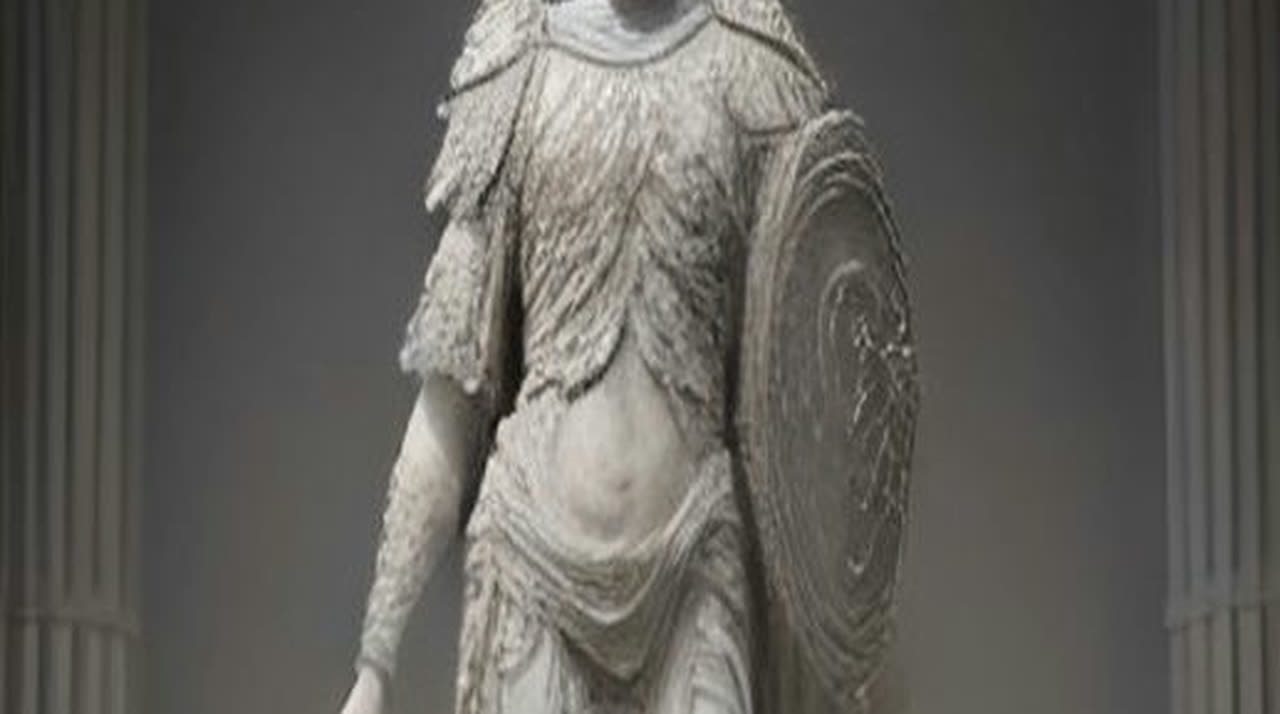
On the evening of 21 October 2026, at Sotheby's in New York, bidding on lot after lot moved at the usual brisk clip until it reached a two-thousand-year-old lump of marble and simply stopped moving. Fourteen minutes later, the hammer fell at $34.3 million — a new auction record for a Roman antiquity.
Here is what the buyer gets for that money: a chest. The lot is a marble torso of a Roman emperor, roughly three and a half feet tall, wearing an elaborately carved breastplate. There is no head. There are no arms. There are no legs. It is, anatomically speaking, the part of a person you would struggle to pick out of a line-up, and it just outsold almost every living artist on earth.
Work it out per inch and you get about $820,000 for every inch of surviving marble. Hold that number. We're going to find something that makes it look like a clearance deal.
What $34.3 million actually buys
The torso is Roman Imperial, Julio-Claudian, first century CE — the dynasty that starts with Augustus and ends, badly, with Nero. Sotheby's estimated it at $8 million to $12 million. It sold for close to three times that high estimate, which in the antiquities world is less a result than a small earthquake. ARTnews reported the sale out of the house's Magnum Opus evening auction.
The marble itself is part of the story. It's Parian marble, quarried on the Greek island of Paros — the premium stone of the ancient Mediterranean, the stuff you used when you wanted the surface to glow slightly rather than sit there like a kitchen worktop.
And then there's the breastplate, which is where the actual artistry lives. As Popular Science detailed in its write-up of the piece, the cuirass is carved with a layered propaganda programme: Sol, the sun god, driving his four-horse chariot across the sea; below him two figures of Victory flanking a tropaeum, the monument Romans built from the abandoned weapons of people they had just defeated; and along the overlapping leather straps, ram and feline heads for strength and warding off evil. Translated: the sun rises because we say so, and these are your friends' swords. Alexandra Olsman, Sotheby's antiquities specialist, framed the design question the Romans were solving as simply: "How does this convey power?"
You are not looking at a man. You are looking at a chest wearing an argument.
This was never decorative. According to the same reporting, the statue stood in a temple in Salona, the Roman capital of Dalmatia — today Solin, just outside Split in Croatia. Sotheby's records place it in one of the twin temples at the forum's northeastern corner. It was municipal signage for an empire, installed in a conquered province to remind everyone who was in charge.
The Romans built it to lose its head
Now the detail that reframes the whole object, and the reason this story is stranger than "old thing expensive."
Roman imperial statues were frequently modular. The body was carved as a standard armoured type, and the portrait head was made separately and fitted in. When one emperor died and the next arrived, a provincial town with a tight budget did not commission a new statue. It swapped the head. Same chest, same heroic cuirass, new face. Popular Science notes exactly this of our torso's era: heads and limbs were regularly replaced to represent successive emperors.
Rome, in other words, invented the software update. The body was the hardware; the head was a patch. And when an emperor fell out of favour badly enough to be formally erased — damnatio memoriae — that same modularity made deleting him trivially easy. Pop the head, insert successor, carry on. The propaganda machine shipped with hot-swappable parts.
Which leads to an honest and slightly delicious problem: nobody is certain who this is. Sotheby's says it likely represents Augustus, Tiberius or Claudius. Likely. The body is generic by design; the identity lived in the head; the head is gone. Somebody paid $34.3 million for an emperor and did not get a name — the ancient world's most expensive anonymous profile picture.
Why broken costs extra
Every instinct says damage should discount a thing. In the art market, remarkably often, it does the opposite — and this is not a modern quirk invented to justify prices.
Exhibit A is the Belvedere Torso in the Vatican: another headless, armless, legless hunk of marble, and one of the most influential objects in European art. The story goes that Pope Julius II asked Michelangelo to restore it — to give it back its missing pieces — and Michelangelo refused, on the grounds that it was already perfect. He preferred it broken. Scholars have argued ever since that the fragment fed directly into his own non-finito — the deliberately unfinished figures straining out of raw stone.
Exhibit B turned up out of the ground on a Greek island in 1820 with both arms missing and was immediately crowned the standard of beauty anyway. Nobody has ever successfully "fixed" the Venus de Milo, and every proposed reconstruction of her arms looks faintly ridiculous. The eighteenth-century critic Winckelmann made the case plainly about the Belvedere Torso: headless, it still reads as the seat of lofty thought; armless, it seems to lift the world; legless, it suggests the height of movement.
The mechanism is the same one we've chased through this journal before: absence is participatory. A complete figure tells you what it is. A fragment hands you the job. Your eye runs off the broken edge and your brain finishes the gesture, which means the version you assemble is privately tuned to be magnificent. It's negative space doing structural work — and it's the same reason an outline can out-perform a portrait. Less information, more projection.
A caveat, because the rule is not magic: broken alone is worthless. Auction houses are full of battered Roman fragments that sell for four figures. What commands $34.3 million is a fragment that is also top-quality carving, in prestige marble, with an imperial subject and a paper trail. Damage is a multiplier on quality, not a substitute for it.
The money, and the 21x lioness
The price history here is its own small thriller. The identical torso came up at Sotheby's in 2010 against an estimate of $800,000 to $1.2 million and sold, per artdaily, for $7.36 million. Sixteen years later it made $34.3 million. That is a 4.7x return, or roughly 10% compounded annually, which a headless statue has no business delivering and which quietly beat a lot of actual investment products over the same stretch.
Now that per-inch number. Our torso: about $820,000 an inch. The most expensive antiquity ever sold at auction is still the Guennol Lioness, a Proto-Elamite limestone figure roughly 5,000 years old that made $57.2 million at Sotheby's in December 2007. It is 3.25 inches tall. You could lose it in a coat pocket. That works out to about $17.6 million per inch — meaning the tiny lioness is roughly 21 times more expensive, inch for inch, than a life-sized Roman emperor.
Which is the cleanest possible proof that size has nothing to do with it, and that the art market prices rarity, story and desire rather than material. Readers who followed the $50 million T. rex will recognise the choreography exactly: dramatic lighting, a name, a narrative, an anonymous buyer, a number that detaches from anything resembling cost. The object is the excuse; the staging does the work. It's the dynamic behind the $6.2 million banana, just with better taste in masonry.
The part that isn't fun
A statue carved for a temple in Roman Dalmatia spent Tuesday evening being sold in Manhattan. That deserves a straight look rather than a shrug.
The legal position is genuinely clean, and that matters. The working standard across museums and the trade is that an antiquity should have documented ownership predating the 1970 UNESCO convention on illicit cultural property — the line that separates the legitimate market from the looted one. This torso was acquired in Split in the mid-nineteenth century, when Dalmatia was part of the Austrian empire. That is about 120 years clear of the cut-off. Nobody dug this up last year and laundered it through a Geneva freeport; its paperwork is older than most countries' heritage laws. As with the $30 painting that made $1.35 million, the documentation is not a footnote to the value — it substantially is the value.
Legal, though, is not the same as settled. Pre-1970 provenance is a rule drawn where it could realistically be enforced, not a moral verdict on everything that happened earlier. Nineteenth-century collecting in the Mediterranean was not, as a rule, a story of enthusiastic local consent. Croatia has not launched a claim here and there is no suggestion of wrongdoing by anyone involved — but "the paperwork starts in 1850" answers a legal question, not a historical one. Objects this visible also become targets in their own right, as France's run of brazen museum heists keeps demonstrating.
And the honest unknowns should stay on the table: we don't know who bought it, we don't know whether it will ever be publicly displayed, and we don't actually know which emperor it is.
Quick questions
How much did it sell for? $34.3 million at Sotheby's New York on 21 October 2026, after about fourteen minutes of bidding, against an $8–12 million estimate. It is a record for a Roman antiquity. The same piece sold for $7.36 million in 2010.
Why are so many Roman statues headless? Heads and arms break off first — they stick out. But Roman workshops also made many imperial statues in parts, with swappable portrait heads, so one body could serve several emperors in succession.
Is selling an ancient statue legal? Here, yes. The accepted benchmark is documented ownership before the 1970 UNESCO convention; this torso's record in Split goes back to the mid-1800s, well clear of it.
Sources and notes: the $34.3m result, the $8–12m estimate, the roughly fourteen minutes of bidding and the Roman-antiquity record are from ARTnews's report on Sotheby's Magnum Opus evening sale of 21 October 2026 and from Sotheby's own lot listing. The Parian marble, the cuirass iconography (Sol in his quadriga, the paired Victories and the tropaeum, the ram and feline heads), the Salona temple context, the attribution to Augustus, Tiberius or Claudius and the practice of replacing heads and limbs to represent successive emperors are from Popular Science's 2026 feature on the piece, which quotes Sotheby's antiquities specialist Alexandra Olsman. The 2010 result of $7.36m against a $800,000–$1.2m estimate is the published Sotheby's figure as reported by artdaily. The $57.2m Guennol Lioness comparison (Sotheby's, 5 December 2007; 3.25 inches tall) is the published auction result. Per-inch figures and the 2010–2026 compound annual return of about 10% are our own calculations from those published prices and dimensions, and are approximations. The Michelangelo anecdote about the Belvedere Torso is long-standing tradition rather than documented fact, and is presented as such. The photograph at the top of this article is an illustration of a cuirassed torso in a gallery setting, not a photograph of the lot sold. Published 22 October 2026.
The same machinery ran again three days later in Paris, where Monet's Iris made €50 million — a national record for a painting its maker made while close to legally blind.
Elena writes about silhouette art, negative space, shadow play and visual culture for Art Silhouette, where she edits the journal and tests the site's art tools. Her focus is making art theory usable for collectors, designers and beginners.