French Museum Heists: Why Thieves Keep Walking Out the Front Door
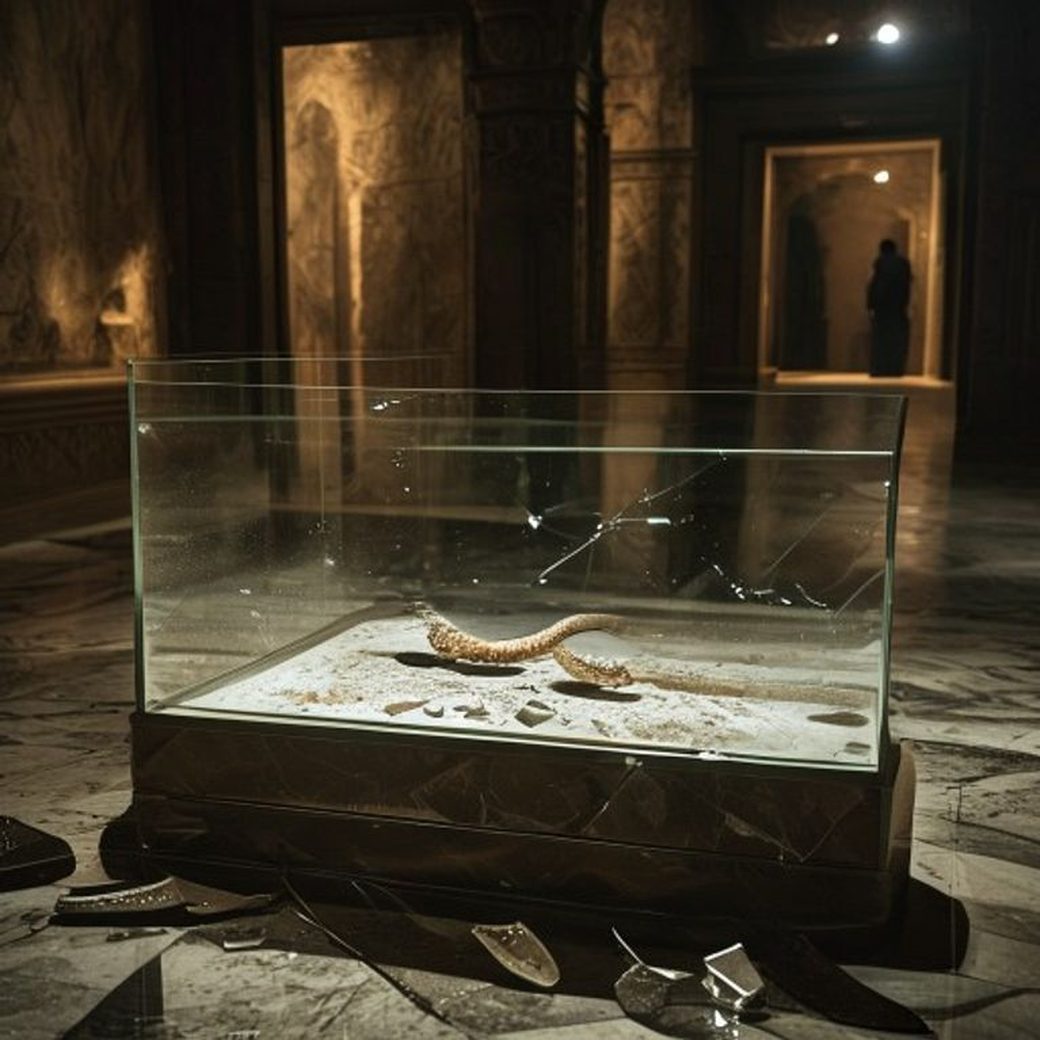
Here is the plan, and I promise it is the actual plan: buy a ticket. Walk in like a tourist. Wait for a quiet moment mid-morning, smash the glass case holding a priceless treasure with a hammer, grab the shiny thing, and stroll back out the front door you came in. No laser grid, no rope descent from a skylight, no George Clooney. In France in 2026 this keeps working — and it just worked again.
On 24 July 2026, two thieves did exactly that at the Musée du Pays Châtillonnais in Châtillon-sur-Seine, Burgundy. They paid the admission fee, entered around 10:30 in the morning, broke the case around a 2,500-year-old Celtic gold torque, and vanished through the main entrance. It was the third brazen French museum heist in nine months. At this point it's not a coincidence — it's a pattern, and the pattern says something uncomfortable about how we guard the things we call priceless.
What actually got taken this time
The stolen piece is a torque — a stiff, open-ended neck-ring that ancient Celts and Gauls wore as jewellery and, more importantly, as a walking advertisement of power. This particular one is a superstar. It belongs to the Vix Treasure, the burial hoard unearthed in 1953 at the foot of Mont Lassois, inside the tomb of a high-status woman archaeologists nicknamed the Lady of Vix. She was buried around 500 BC with a chariot, an enormous bronze wine-mixing vessel taller than a person, and this glittering gold collar weighing roughly half a kilogram.
Half a kilo of gold sounds like a jackpot until you realise the object's real value has almost nothing to do with the metal. As raw bullion the torque is worth maybe the price of a modest car. As a 2,500-year-old key to how Iron Age Europe traded, dressed and buried its powerful women, it is — say it with me — priceless, which is exactly the word that makes a heist like this so nerve-racking. French police did arrest a suspect within days, and the government announced a national museum-security plan in response. But at the time of writing, the torque itself hadn't been confirmed safely back in its case.
The gold in the Vix torque is worth the price of a used car. The torque is worth 2,500 years of European history. Thieves only need the first number to ruin the second.
The pattern: three heists, one method
Rewind the tape and the run is genuinely astonishing. Start with the big one: on 19 October 2025, four thieves hit the Louvre's Apollo Gallery in Paris, using a furniture lift parked outside to reach a first-floor window, and made off with French crown jewels valued at around $102 million, including a diamond-and-emerald piece linked to Empress Eugénie. In July 2026, nine months later, the gallery reopened to the public entirely empty — a hushed room of bare cabinets, which is somehow the most damning artwork in the whole museum.
Then, on 5 July 2026, three masked thieves with sledgehammers hit the Musée Lalique in the Alsace village of Wingen-sur-Moder. In eleven minutes they cracked six display cases and left with 27 pieces of glass jewellery and art — including René Lalique's exquisite Femme libellule (Dragonfly Woman), made between 1898 and 1900 — a haul assessed at roughly €4 million. Three weeks later came the Vix torque. Different regions, different loot, but the same choreography: daytime, low-tech, terrifyingly fast, in and out before anyone with a badge can react.
And it isn't purely a French disease. In early 2025, thieves smashed their way into the Drents Museum in the Netherlands and stole ancient Dacian gold on loan from Romania. Across Europe, the smash-and-grab is having a moment — and the museums keep being cast as the slow, well-lit victim.
Why the front-door method beats high-tech security
Hollywood taught us that stealing from a museum requires acrobatics and a laptop genius. Reality is dumber and scarier. Most museum security is built to spot the movie plot — the after-hours intruder, the tunnel, the disabled alarm — and is weirdly bad at the obvious: someone who walks in during opening hours and simply moves faster than the response time.
A guard is trained to observe, not to tackle an armed person swinging a sledgehammer. Alarms summon police who arrive in minutes; a smash-and-grab is over in one or two. Provincial museums in particular run on thin budgets, skeleton staff and display cases that were never designed to survive a determined blow. The thieves aren't beating the system with genius. They're exploiting the gap between "the alarm goes off" and "someone can physically stop you" — a gap measured in the exact minutes they need.
The part that should actually upset you
Here's the grim twist that separates an art heist from a jewellery-shop robbery. Famous artefacts are almost impossible to sell. The Vix torque is one of the most documented objects of its kind on the planet; no legitimate dealer, collector or auction house would touch it. So investigators' real fear, voiced after both the Louvre and the Vix thefts, isn't that the pieces will end up on some shadowy collector's shelf like in the movies. It's that they'll be melted down for the gold and the gems pried loose and recut — destroyed to launder a fraction of their raw value.
Think about that trade. A 2,500-year-old collar that survived twenty-five centuries in the ground, dug up with enormous care in 1953, could be reduced to an anonymous lump of metal worth a used car — because that lump is easier to fence than the history. If the movie-villain outcome is a private gallery, the realistic outcome is a crucible. That's not theft so much as vandalism with a profit margin, and it's why the "national security plan" France announced matters more than the arrest of any single suspect.
The scariest sentence in art crime isn't "we can't find it." It's "we think they melted it."
The pattern this site keeps meeting
If you read this journal often, something here should feel familiar. We keep circling the same strange truth: an object's price and an object's meaning are two completely different things that only pretend to be related. A banana taped to a wall sold for millions because of its story, not its potassium — and, fittingly, that same banana artwork has literally been stolen and eaten more than once. A 67-million-year-old T. rex fetched $50 million as a trophy. In each case the market and the museum are arguing over what a thing is for.
The heists flip that argument inside out. A thief melting the Vix torque is making the crudest possible claim about value: that a priceless artefact is worth precisely its weight in gold and not one gram more. The museum exists to insist on the opposite — that the meaning is the point, and the meaning is the thing you can't get back. When a display case is smashed, you're not just watching a robbery. You're watching two definitions of "worth" collide at hammer speed.
How to look at the empty case (the not-fun part)
There's an odd, mournful power to those bare cabinets in the reopened Louvre gallery — the same power we talk about in our piece on how emptiness does the emotional work. A missing object can say more than a present one. The Louvre has been here before: the four bare hooks left by the 1911 Mona Lisa theft pulled queues of their own, and turned a specialist's portrait into the most famous painting on earth. The gap where the crown jewels sat is a portrait of loss you don't need a wall text to read.
And museums are already the strange, contested public spaces we picked apart in selfie museums vs real museums — places we treat as both sacred vaults and Instagram backdrops. A heist is the moment the "vault" fantasy breaks in public. It turns out the priceless things sit behind a single pane of glass and the goodwill of everyone who walks past. Most of us honour that quietly. It only takes two people with a hammer and a ticket stub to remind everyone how thin the glass really is.
The honest caveats
Two things worth keeping level-headed about. First, investigations are ongoing, and "melted for gold" is the experts' worst-case fear, not a confirmed fate — plenty of stolen pieces do resurface years later, sometimes remarkably intact. Don't let the drama of the theft convince you the object is definitely gone. Second, three heists in nine months feels like an epidemic, and the headlines love that framing, but France runs thousands of museums; the base rate of catastrophe is still low. The pattern is real and the security gaps are real — just resist the urge to picture a permanent nationwide crime wave from a handful of very cinematic Tuesdays.
And theft doesn't end when the thief walks out. The longest-running art-crime story in Europe is still the 650,000 works seized by the Nazis — where the evidence survives in the thieves' own filing cabinets, and the hunt has now handed a shortlist to an AI chatbot.
What's genuinely true is simpler and sadder: the objects we agree to call priceless are protected by systems designed for a slower, sneakier kind of thief than the one who actually shows up. Until that changes, the smartest heist in France remains the least clever one imaginable. Buy a ticket. Bring a hammer. Beat the response time. The rest is just history, quietly disappearing through the front door.
Quick questions
What was stolen from the French museum in July 2026? A 2,500-year-old Celtic gold torque — a rigid neck-ring — from the Musée du Pays Châtillonnais in Châtillon-sur-Seine, taken on 24 July. It's a star piece of the Vix Treasure, found in 1953 in the tomb of the "Lady of Vix," and weighs about half a kilogram of gold. The thieves bought tickets, smashed the case mid-morning, and fled through the front entrance. A suspect was later arrested.
Why steal ancient gold if you can't sell it? Because famous artefacts can't be sold — every dealer knows they're stolen. Investigators' fear is that thieves melt the piece down for its raw gold and recut any gems, destroying priceless history for a fraction of its value.
Does stolen art usually come back? Mostly not. Bodies like the FBI and Interpol suggest only a small share of stolen art and antiquities — often cited well under 10 percent — is ever recovered. Some resurfaces decades later; anything melted down is gone for good.