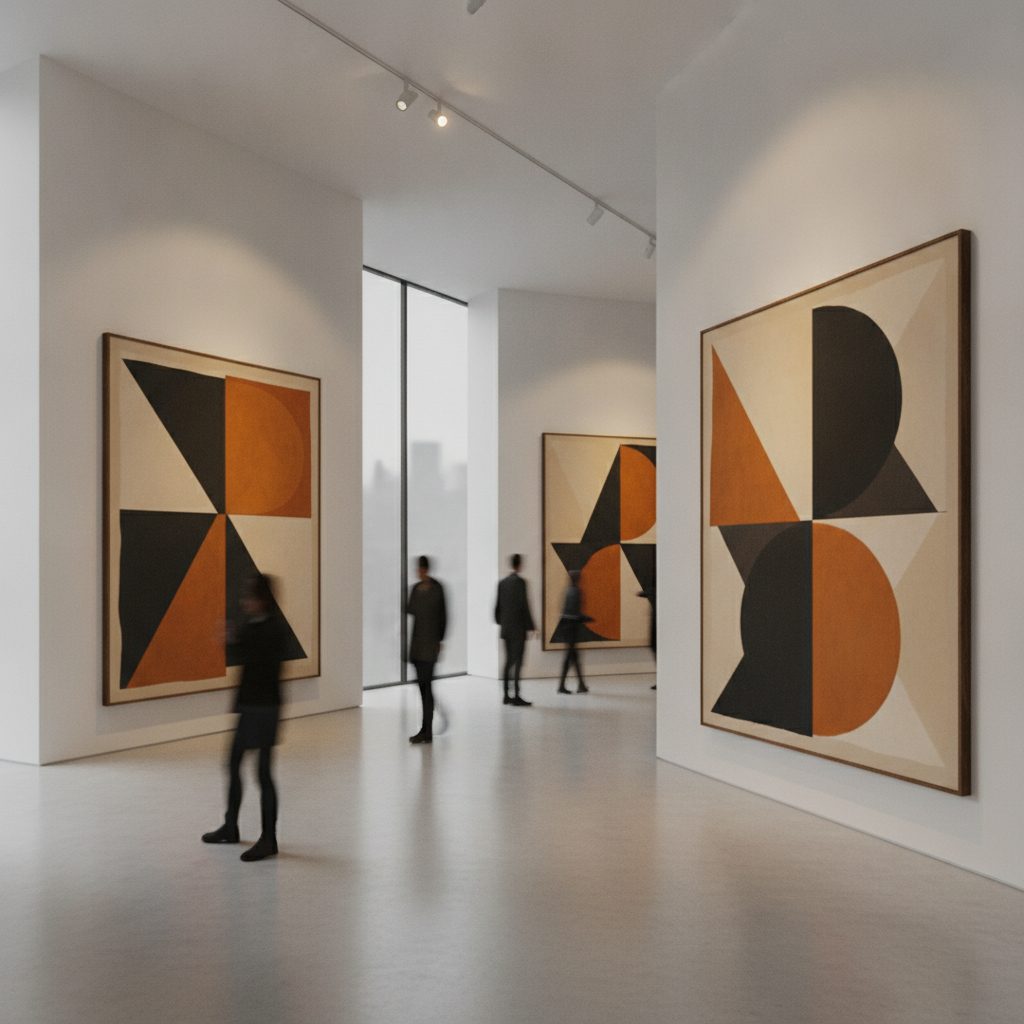
There is a particular silence that falls in front of an abstract painting. No horse, no saint, no bowl of fruit to hold on to — just colour and shape, and the quiet suspicion that everyone else in the room gets it and you don't. That suspicion is almost always wrong. Abstraction isn't a code with a hidden answer key. It is a different kind of looking, and once you know what to look for, the anxiety lifts.
Here is a method — five things to attend to, in order — that works on almost any modern or reductive work, and mirrors the slow-looking questions that unlock an old master.
1. Start with your body, not your brain
Before you ask what a painting means, notice what it does to you. Do you lean in or step back? Does it feel loud or slow, warm or cold, calm or agitated? Mark Rothko wanted people to stand close to his huge fields of hovering colour until they felt something close to the emotions — "tragedy, ecstasy, doom" — he put into them. He wasn't hiding a picture in there. The feeling is the picture. Trust the reaction before you explain it.
2. Read the shapes as shapes
Now look the way we've been looking all through this journal: at the positive shapes and the negative space between them. Ellsworth Kelly built a whole career from exactly this — a single curved form of pure colour against white, often traced from a shadow, a plant, or the gap under a bridge. He removed everything except the shape and its ground. Stand in front of a Kelly and you are doing advanced silhouette-reading, whether or not anyone calls it that.
Abstraction didn't abandon the world. It kept the shapes and threw away the labels.
3. Follow the edge and the hand
Where is the edge crisp, and where does it blur or bleed? A hard edge feels designed, controlled, cool. A ragged or dripping one feels bodily and urgent. Compare the taped precision of a Kelly to the smoky, breathing borders of a Rothko: same era, opposite temperature, and the difference lives entirely in the edges. Look, too, for the trace of the hand — thick paint, scraped canvas, a visible gesture. It tells you how fast the work was made and how much the artist wanted you to feel their presence.
4. Bring back the subject — carefully
Much "abstract" art isn't fully abstract; it's reductive. It starts from something real and strips it down. Henri Matisse, too ill to paint, spent his last years "drawing with scissors," cutting shapes from painted paper. His famous blue nudes are unmistakably bodies — just reduced to a few confident silhouettes. Knowing the source doesn't spoil the magic; it shows you the decisions. Ask: what did the artist keep, and what did they dare to leave out? The leaving-out is where the art is.
5. Let the context land last
Only now read the wall label. This order matters: if you read first, you'll spend the whole time hunting for what the text told you to find. Read last, and the context deepens what you already felt instead of replacing it.
Context can transform a work. Kara Walker uses the daintiest, most nostalgic medium imaginable — the cut-paper silhouette, the very parlour craft we traced in the history of the form — and fills room-sized panoramas with brutal scenes of American slavery. The prettiness is the trap; the horror is the point. Her work only detonates when you know that the genteel technique and the violent content are deliberately at war. That is context doing what it should: not decoding a puzzle, but sharpening a blow you've already begun to feel.
The permission slip
Abstraction's real demand is simple and a little frightening: it hands the looking back to you. There is no correct sentence waiting at the end. A great reductive work is a well-made instrument, and you are the one who gets to play it. Stand there long enough to have a reaction, look hard enough to say what shapes and edges caused it, and you are reading modern art exactly as it was meant to be read — no jargon required.